
Kosher vs. Halal: What's The Difference?

At the risk of oversimplifying the two: Kosher food follows Jewish dietary law, while halal food follows Islamic dietary law.
They share some immediate similarities. For example, both traditions prohibit pork and establish requirements for preparing meat. But their differences include rules about combining meat and dairy, consuming alcohol, choosing seafood, and certifying food.
Whether you’re shopping for yourself, hosting friends, or planning meals for a campus or hospital, understanding kosher vs. halal helps you ask the right questions.
Kosher vs. Halal at a Glance
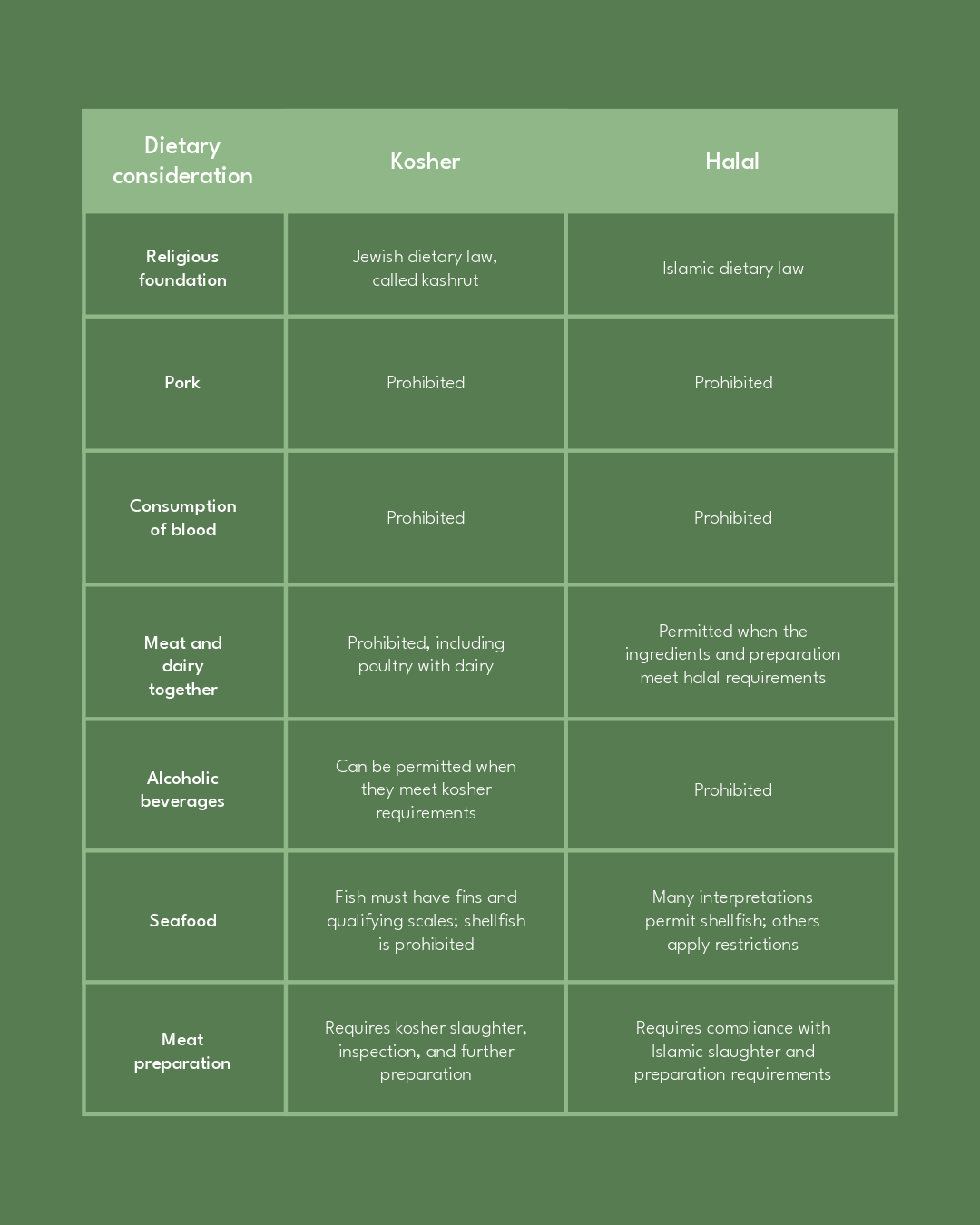
These general distinctions provide a starting point. Individual practices and accepted certifications can vary among communities.
What Does Kosher Mean?
The Hebrew word kosher means “fit” or “proper.” In food, it describes compliance with Jewish dietary laws, known as kashrut.
Those laws address ingredients, preparation, and the equipment used to produce a meal. Kosher foods fall into three main categories:
- Meat: Includes permitted red meat and poultry, along with foods made using their ingredients.
- Dairy: Includes milk, cheese, butter, yogurt, and foods containing dairy ingredients.
- Pareve: Foods classified as neither meat nor dairy. Eggs and kosher fish can be pareve, as can appropriately prepared fruits, vegetables, and grains.
For a closer look at these categories and how to recognize certification symbols, explore our Kosher for Beginners guide.
What Does Halal Mean?
Halal is an Arabic word meaning “permitted” or “lawful.” Applied to food, it describes what Islamic dietary law allows. Haram refers to what is prohibited.
Halal requirements extend across the meal, including meat, sauces, snacks, beverages, and the equipment used during production. Ingredients and handling both matter when determining whether a prepared food meets halal standards.
The Main Differences Between Kosher and Halal Food
1. Kosher Separates Meat and Dairy
Keeping kosher involves preparing and eating meat and dairy separately. This includes poultry: chicken with dairy cheese falls outside kosher dietary requirements.
That separation also affects cookware, dishes, and utensils.
Halal dietary rules allow meat and dairy to be combined when the ingredients and preparation meet halal requirements. A beef cheeseburger, for example, can qualify as halal when its components and preparation comply with the appropriate standards. Combining beef with dairy cheese would violate kosher requirements.
2. Halal Prohibits Alcoholic Beverages
Alcoholic beverages and intoxicants are prohibited under halal dietary rules.
Kosher requirements permit certain alcoholic beverages, including appropriately certified wine. Their kosher status depends on ingredients and production; wine, in particular, requires reliable kosher certification.
This difference can affect food as well as drinks. A sauce made with kosher wine may meet kosher requirements and still be unsuitable for someone following halal dietary rules. Questions involving alcohol in flavorings or other manufacturing processes should be checked against the halal authority’s specific standards.
3. Seafood Rules Differ
Kosher fish must have fins and qualifying scales—scales that can be removed without damaging the skin. Shellfish, including shrimp, crab, and lobster, is prohibited. Preparation and equipment also affect the kosher status of fish products.
Halal seafood rules vary across Islamic interpretations. Many permit a broad range of seafood, including shellfish. Others follow more limited rules about which sea creatures may be eaten.
For someone choosing a seafood meal, the appropriate option depends on the religious guidance they follow.
4. Meat Must Meet Different Preparation Requirements
Both traditions establish requirements for meat, beginning with which animals may be eaten.
For kosher meat and poultry, slaughter must be performed by a specially trained Jewish slaughterer, called a shochet. The process, known as shechita, follows detailed requirements. Meat also undergoes inspection and preparation to remove prohibited blood, generally through soaking and salting or, where appropriate, broiling.
Halal slaughter, often called dhabihah or zabiha, follows Islamic requirements governing the animal and slaughter process, including invoking God’s name. Certifying authorities apply their standards to determine whether the meat qualifies as halal.
These distinct requirements explain why two packages of chicken can carry different religious certifications.
Is Kosher Food Halal?
Acceptance of kosher food varies among Muslims. Kosher certification alone does not establish halal status.
Some Muslims accept kosher meat based on their understanding of Islamic teachings concerning food prepared by Jewish people. Others require meat that meets specific halal slaughter requirements.
The rest of the product matters, too. A kosher item could contain wine or another ingredient that makes it unsuitable for a particular halal consumer. Following a trusted religious authority or halal certifier helps resolve those questions.
For anyone planning meals for a group, asking which certifications people accept is a useful first step.
Is Halal Food Kosher?
Halal food qualifies as kosher only when it also meets the full requirements of Jewish dietary law.
A halal label alone leaves kosher requirements unverified. Those requirements include kosher slaughter for meat and poultry, appropriate supervision, and suitable production equipment.
A prepared halal meal might also combine meat and dairy, which kosher law prohibits. Someone who keeps kosher should choose food with reliable kosher supervision that meets their standards of observance.
How to Choose Kosher or Halal Meals Away From Home
An airport connection, a busy day on campus, or a hospital stay can make meal planning more complicated. A few specific checks help make the choices clearer:
- Check the certification on the individual product. Confirm which organization certifies it and whether that certification meets your needs.
- For kosher meals, check the category. Meat, dairy, and pareve designations help you plan what to eat together.
- Ask about handling and reheating. Preparation equipment can affect whether a meal remains suitable.
- When serving others, confirm their requirements. Ask which certifications and serving arrangements they accept.
USDA guidance similarly emphasizes that kosher and halal certifications serve different requirements and that accepted certifications can vary between communities.
Frequently Asked Questions About Kosher and Halal
Can Food Be Both Kosher and Halal?
A product can meet both sets of requirements and carry both certifications when approved by the respective certifying organizations. Each certification establishes compliance with its own standards, so check the specific product and its certifications.
Is Vegan Food Automatically Kosher or Halal?
A vegan label addresses animal-derived ingredients. Kosher and halal requirements also address production, equipment, and other ingredients.
Prepared vegan food may still raise questions about shared equipment or alcohol-containing ingredients. Reliable certification helps clarify whether a product meets the standards you follow.
Does Pareve Mean Vegan?
Pareve describes a kosher food’s classification as neither meat nor dairy. Eggs and kosher fish can be pareve, so a pareve product may contain animal-derived ingredients. Checking the complete label helps you identify a product that fits your dietary needs.
Good Kosher Food, Wherever the Day Takes You
Understanding food labels helps you choose meals that fit your needs. Having convenient options makes putting that knowledge into practice easier.
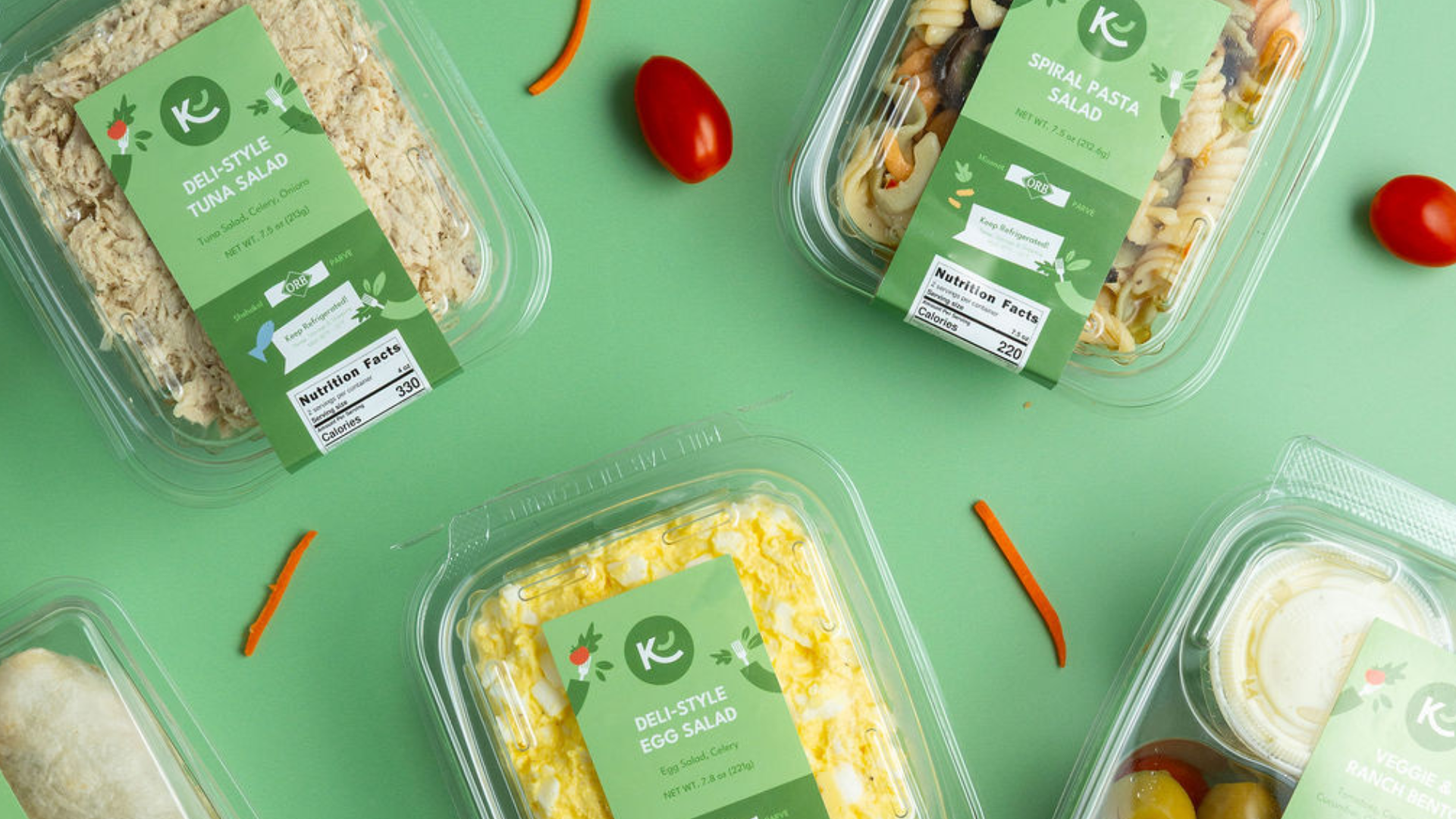
At Kosher Eats, we help bring good kosher food into everyday life through grab-n-go options and ready-to-eat meals, including meals supplied to hospitals and cruise lines.
Looking to expand kosher options for the people you serve? Talk to the Kosher Eats team.




© 2025 by Kosher Eats. Website design and development by 1744 Marketing.
Accessibility | Terms & Conditions | Privacy Policy