
The History of Cholent
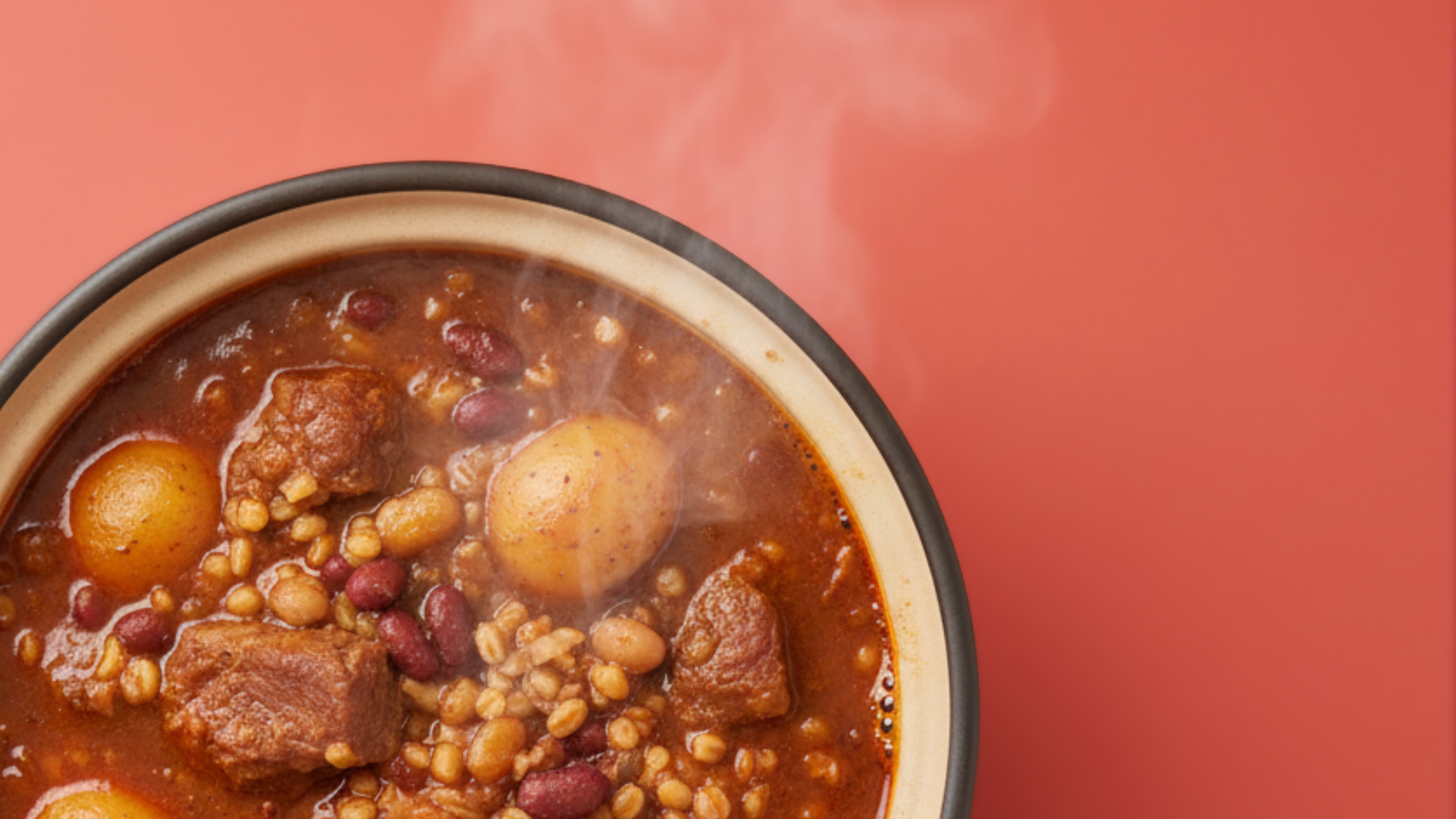
Part comfort food. Part culinary problem-solving. Few foods can claim to be both, but Cholent is exactly that. Admittedly, Cholent might not be the most appetizing word, but it’s got our mouth watering just typing it.
Cholent is a slow-cooked stew that simmers overnight and shows up at the Shabbat table hot, hearty and ready to eat.
For many Ashkenazi Jewish homes, it’s the smell of Shabbat morning: tender beef, soft beans and barley, and potatoes that have practically melted into broth.
If you’re just hearing of Cholent for the first time, we’re here to tell you everything you need to know about the delectable stew.
What is cholent?
Cholent is a slow-simmered stew traditionally cooked overnight and served the next day, most often on Shabbat. It typically includes a mix of meat, beans, potatoes, and barley, all cooked low and slow until rich, thick, and deeply savory.
Why cook it overnight? Great question.
Cholent’s signature cooking method is tied to Shabbat observance. For generations, Jewish cooks assembled ingredients before sundown on Friday and let the pot cook gently overnight so a hot meal could be enjoyed the next day.
Where did cholent come from?
Cholent developed across the Jewish diaspora as families adapted to local ingredients and cooking styles while keeping the same core idea: a stew that could be started before Shabbat and eaten hot later.
In Ashkenazi tradition, cholent became especially associated with the Jews of medieval France and later spread through Germany and Eastern Europe, traveling with immigrant communities to places like North America and beyond.
The meaning of “cholent”
The word has a famously debated backstory. One widely cited scholarly explanation traces it to roots meaning “warm” or “hot,” moving through Latin and Old French into Yiddish usage.
You may also see folk explanations connecting the name to French phrases that suggest “hot” and “slow,” which fits the dish’s whole vibe.
But we’re more interested in how it tastes.
What makes cholent taste like cholent?
Cholent’s flavor is all about time. A long, gentle cook turns basic pantry staples into something greater than the sum of its parts.
Classic Ashkenazi cholent usually includes:
- Beef (often brisket or chuck) for richness
- Beans (kidney, pinto, or a mix) for body
- Barley for that thick, spoon-coating texture
- Potatoes for heartiness and natural “stew gravy”
- Onion and garlic for depth
- Seasonings like paprika, pepper, and a little sweetness (often optional)
That overnight simmer softens the beans, tenderizes the beef, and lets barley slowly release starch, giving cholent its signature thickness.
Cholent’s cousins around the world
Cholent is often spoken about as one dish, but the larger tradition is a whole family of Shabbat stews with regional personalities.
A few you might run into:
- Hamin / chamin (often Sephardi): another Shabbat stew tradition, sometimes with chickpeas, whole eggs in the shell, and warming spices.
- Dafina / adafina (North African): frequently built around potatoes and meat, sometimes colored with saffron or turmeric, and linked to the idea of a “buried” pot cooking slowly.
- Schalet / sólet (Central Europe): closely related to cholent, shaped by local grains and seasonings, including barley-forward versions in places like Hungary.
The theme stays consistent: a pot that cooks patiently and feeds a table well.
How to make cholent (the streamlined approach)
Here is the simplest way to think about it:
- Soak beans (optional, but helpful)
- Brown the beef (for deeper flavor)
- Layer everything in the pot, add liquid, and cook low for a long time
- Taste and adjust salt at the end
You can cook cholent in a slow cooker or in the oven overnight.
Classic Ashkenazi cholent recipe
This recipe keeps the ingredient list familiar and the steps straightforward while still delivering the real deal.
Ingredients (serves 8)
- 2 cups dried beans (kidney, pinto, or a mix), rinsed
- 1 cup pearl barley, rinsed
- 2 to 2½ lbs beef chuck or brisket, cut into large chunks
- 1 large onion, chopped
- 4 cloves garlic, minced
- 4 to 5 medium potatoes, peeled and cut into large chunks
- 1 to 2 tbsp paprika
- 1½ tsp kosher salt, plus more to taste
- ½ tsp black pepper
- 6 cups water or beef broth (enough to mostly cover)
- Optional: 1 to 2 tbsp ketchup or tomato paste for a slightly richer base
Bean note: A soak helps beans cook more evenly. An overnight soak works great. A quick soak works too.
Step 1: Build flavor (5 to 10 minutes)
Heat a little oil in a skillet. Sear the beef until browned on a few sides. This step adds depth, and you can keep it quick.
Step 2: Assemble the pot (5 minutes)
Add beans and barley to the bottom of your slow cooker or Dutch oven. Add onion, garlic, and potatoes. Nestle the browned beef on top. Sprinkle in paprika, salt, and pepper. Pour in water or broth until everything is mostly covered.
Step 3A: Slow cooker method (easy modern classic)
- Cook on LOW for 10 to 12 hours, then keep on WARM until serving.
- Check liquid around hour 8 if your cooker runs hot. Add a splash of water if the stew looks dry.
Step 3B: Oven overnight method (traditional style)
- Preheat oven to 250°F.
- Cover your Dutch oven tightly.
- Bake for 10 to 12 hours.
- Check in the morning and add a bit of hot water if needed.
Step 4: Finish and serve
Stir gently and taste. Add salt if the flavors need a lift. Serve hot in bowls, with rye bread or a simple salad if you want something fresh on the side.
Cholent FAQ
What is cholent made of?
Most classic versions include beef, beans, barley, potatoes, onion, and seasonings, cooked slowly until thick and tender.
How long does cholent take to cook?
Cholent usually cooks 10 to 12 hours on low heat, either in a slow cooker or a low oven.
Is cholent the same as hamin?
They are related traditions. Cholent is the common Ashkenazi name, while hamin/chamin is often associated with Sephardi communities and can include different spices, chickpeas, and sometimes whole eggs cooked in the shell.
How should cholent be stored?
Cool it quickly, refrigerate in an airtight container, and reheat gently. Cholent often tastes even better the next day.
Cholent has lasted because it solves a problem and tastes incredible while doing it. It carries history in every spoonful: a dish shaped by time, travel, and tradition, yet still perfectly at home in a modern slow cooker.




© 2025 by Kosher Eats. Website design and development by 1744 Marketing.
Accessibility | Terms & Conditions | Privacy Policy